
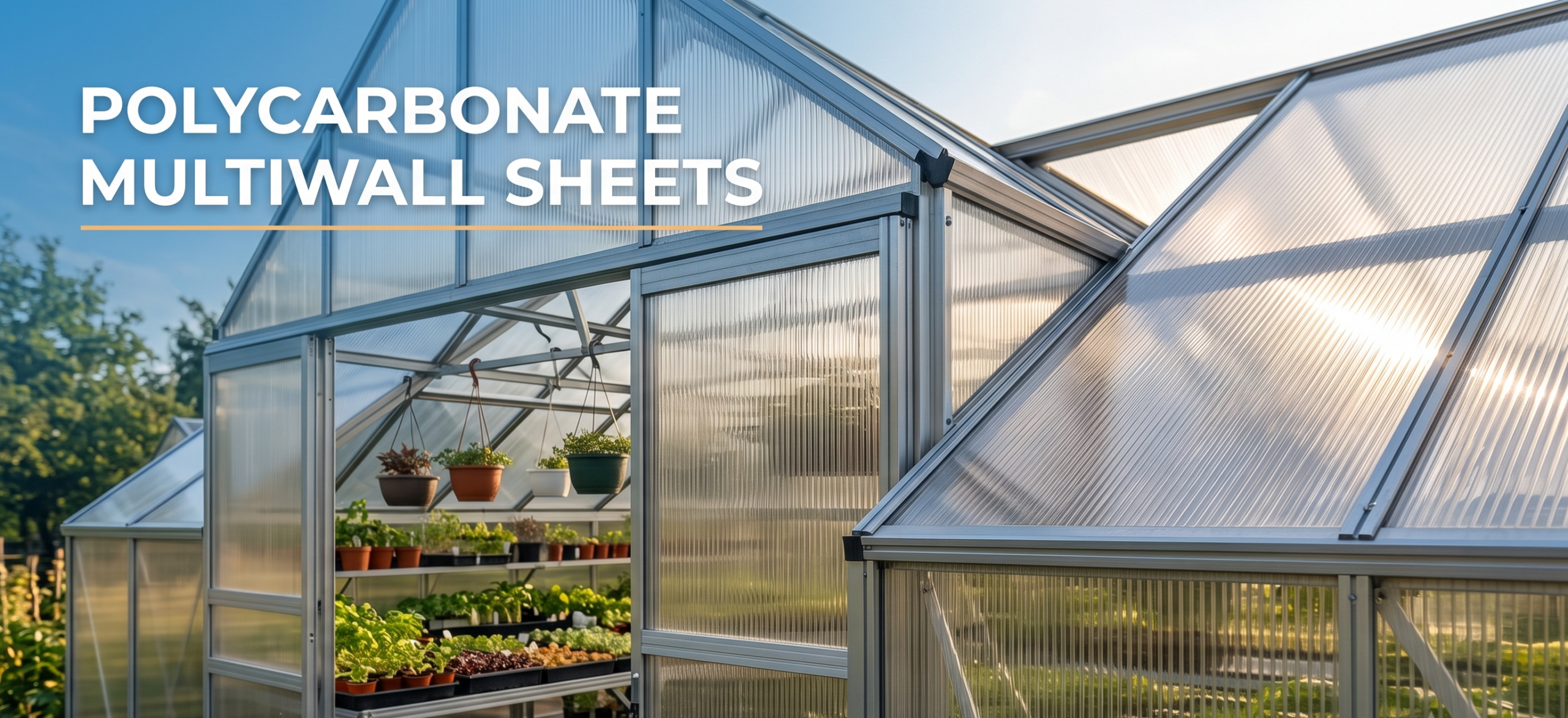
Here’s a scene you’ve probably lived through. Monsoon rain hammering down on a shed roof, loud enough to drown out a phone call — except somehow, under this one particular roof, you can still hear yourself think. That’s a polycarbonate multiwall sheets quietly doing its job.
Most people don’t think about roofing material until it fails. A cracked shed. A greenhouse that scorched the tomatoes instead of nurturing them. That’s usually the moment someone finally searches “polycarbonate multiwall sheets.” So let’s cut through the confusion — no jargon, just what you actually need to know.
What Is a Polycarbonate Multiwall Sheets, Really?
Picture a honeycomb cross-section, minus the bees. Two flat outer layers of rigid polycarbonate resin, held apart by internal ribs, trapping air channels in between. Those air pockets aren’t decorative — they trap heat, cut down noise, and make the sheet dramatically lighter than glass while shrugging off hailstones that would shatter a window.
It’s basically the answer to: “How do I get glass-like clarity without the fragility?”
Twinwall, Triplewall, Fourwall — What’s the Actual Difference?
The naming sounds like video game tiers, I know. Here’s the plain version:
| Structure | Wall Layers | Best For | Insulation |
|---|---|---|---|
| Twinwall | 2 | Greenhouses, budget roofing | Moderate |
| Triplewall | 3 | Skylights, insulated roofing | Good |
| Fourwall (X-structure) | 4 | Cold storage, extreme climates | Excellent |
| Honeycomb | Multi-diagonal ribs | Heavy load-bearing roofs | Very good |
Rule of thumb: more walls means better insulation and strength, but more weight and cost too. A farm shed probably only needs twinwall. A cold-storage facility needs to look higher up the table.
Why This Matters More in India
- Heat is relentless — UV-resistant coatings block harmful rays while letting usable light through, which greenhouses need without the sunburn.
- Monsoons are loud — the air-pocket structure muffles rain noise far better than plain corrugated sheets.
- Weight matters for transport — polycarbonate is roughly a sixth the weight of glass, cutting labor and structural costs.
- Impact resistance matters wherever hailstorms (or stray cricket balls) are a real hazard.
Where Are These Sheets Actually Used?
- Greenhouses and multi-span structures — diffused light spreads evenly across crops instead of scorching patches.
- Roofing for sheds, warehouses, factory skylights.
- Skylights and glazing for daylight without glass’s fragility.
- Canopies and carports — walkways, entrance covers, fuel station roofs.
- Facades — a modern, semi-transparent architectural look.
Thickness: The Part Everyone Skips
A lot of buyers pick sheets on price alone, then wonder why the roof sags after one monsoon. Standard thickness runs from 4mm to 25mm, and the right choice depends on span and load.
| Thickness | Typical Use | Load Capacity |
|---|---|---|
| 4–6mm | Small greenhouse panels, canopies | Light |
| 8–10mm | Residential roofing, carports | Moderate |
| 16mm | Commercial roofing, skylights | Good |
| 25mm | Industrial roofing, cold storage | High |
Quick tip: check rib spacing alongside thickness. Two sheets of identical thickness can perform very differently depending on internal rib density.
What Actually Drives the Price?
- Resin grade — virgin vs. recycled blends change both cost and lifespan.
- UV coating quality — co-extruded protection on both sides costs more but prevents yellowing.
- Structure type — twinwall vs. triplewall vs. X-structure.
- Warranty — a 10-year warranty sheet always costs more than an unbranded one.
- Order volume — bulk B2B orders bring per-square-meter costs down.
Don’t chase the cheapest quote blindly — a slightly pricier UV-coated sheet will often outlast two cheap ones combined.
Choosing a Reliable Manufacturer or Supplier
- Ask for third-party lab test reports, not just the manufacturer’s own data sheet.
- Confirm cut-to-size capability so you’re not wasting material.
- Check for anti-drip and condensation-resistant coatings if it’s headed to a greenhouse.
- Favor suppliers with international export experience — usually a decent proxy for consistent quality.
FAQs
Is multiwall polycarbonate better than glass for roofing? For most commercial and agricultural uses, yes — lighter and far more impact-resistant, though glass still wins on scratch resistance.
How long do these sheets last? With proper UV coating and installation, 10 to 20 years is realistic.
Do they yellow over time? Lower-quality sheets without UV co-extrusion can yellow within a few years — always ask about UV protection specifically.
Are they suitable for Indian greenhouses? Very much so — they diffuse sunlight evenly while blocking harmful UV, which is why they’ve largely replaced plastic film in commercial farming.
Wrapping Up
A polycarbonate multiwall sheets is unglamorous but does a lot of heavy lifting — literally. Get the structure, thickness, and supplier right, and it’s the difference between a ten-year investment and a two-year headache.
Got a specific project in mind? Share the details and I’ll help you narrow down the right thickness and structure for it.

