
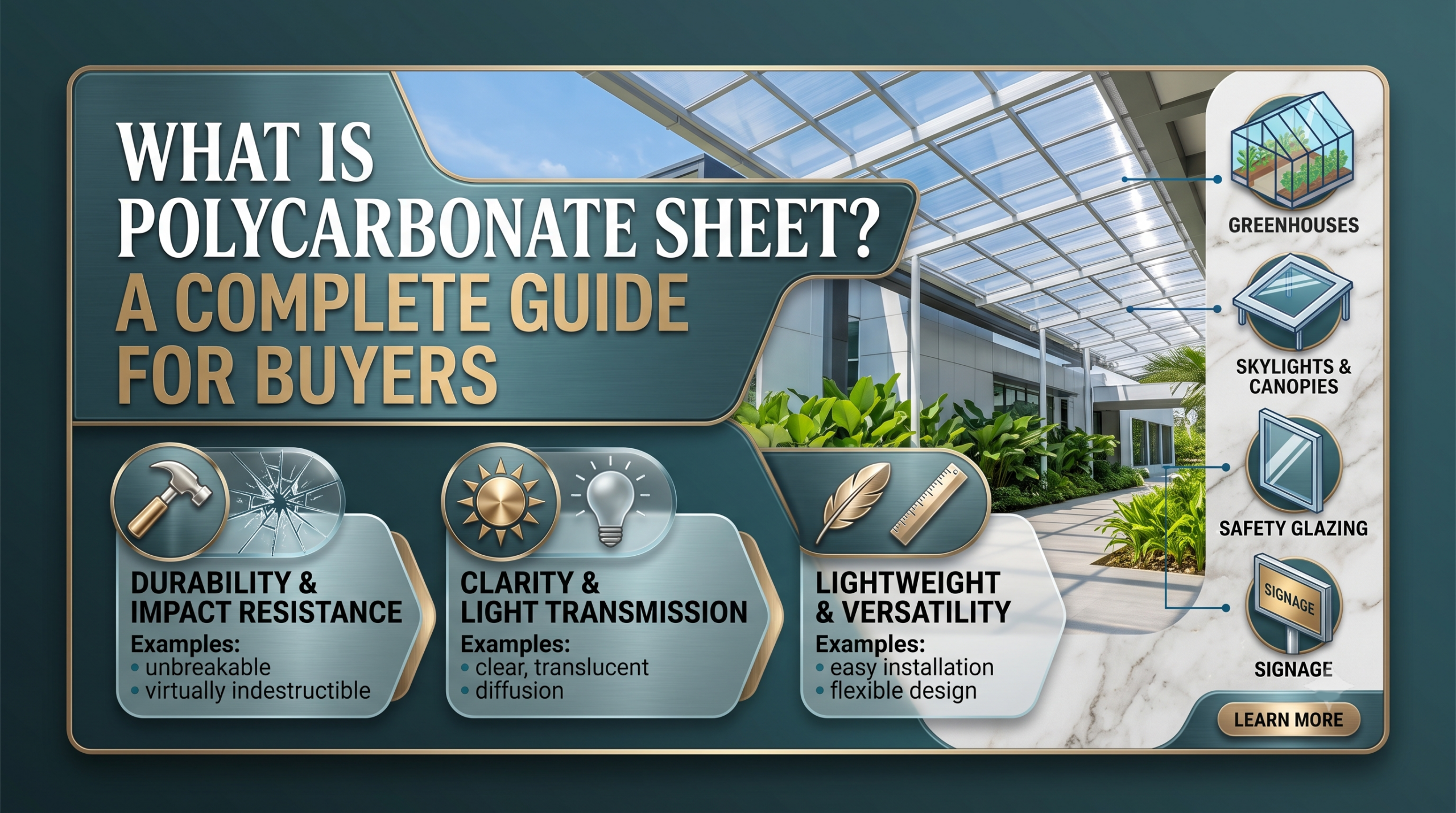
If you’ve ever compared roofing or glazing materials for a construction, signage, or industrial project, chances are “polycarbonate sheet guide” came up in the conversation. It’s one of the most widely used engineering plastics in the world — but for first-time buyers, the range of types, thicknesses, and grades can be confusing.
This guide breaks down everything you need to know before you place an order: what polycarbonate is, how it’s made, the different types available, where it’s used, and how to choose the right sheet for your project.
What Is Polycarbonate?
Polycarbonate (PC) is a high-performance thermoplastic known for its exceptional strength, clarity, and versatility. It belongs to a family of plastics that are virtually unbreakable under normal use, making it a popular substitute for glass and acrylic in applications where impact resistance matters.
Polycarbonate sheets are manufactured by melting polycarbonate resin and extruding it into flat panels of varying thickness, structure, and finish. Depending on how it’s processed, the result can be a solid, glass-like sheet or a lightweight multiwall panel with internal air channels for insulation.
Key Properties That Make Polycarbonate Stand Out
1. Impact Strength Polycarbonate is roughly 200 times stronger than glass and far more impact-resistant than acrylic. It resists cracking and shattering even under heavy mechanical stress, making it ideal for high-traffic or safety-critical environments.
2. Light Transmission High-quality polycarbonate sheets can transmit up to 90% of visible light, rivaling glass in clarity while weighing significantly less.
3. Lightweight Polycarbonate weighs about half as much as glass of the same thickness, which reduces structural load, simplifies installation, and lowers transportation costs.
4. UV Resistance Most commercial-grade polycarbonate sheets come with a UV-protective coating on one or both sides, preventing yellowing, brittleness, and degradation from prolonged sun exposure.
5. Thermal Insulation Multiwall polycarbonate sheets, with their air-channel structure, provide excellent thermal insulation — helping regulate indoor temperatures in greenhouses, skylights, and roofing applications.
6. Flexibility Polycarbonate can be cold-bent or thermoformed into curved shapes without losing structural integrity, giving architects and designers more creative freedom than rigid glass allows.
7. Fire Performance Polycarbonate is inherently self-extinguishing and meets various fire safety standards, making it suitable for applications where fire resistance is a regulatory requirement.
Types of Polycarbonate Sheets
Not all polycarbonate sheets are the same. Here are the three main categories you’ll encounter as a buyer:
Solid Polycarbonate Sheets A single, dense layer of polycarbonate that closely resembles glass in appearance. Solid sheets offer maximum impact strength and are commonly used for security glazing, machine guards, vandal-resistant windows, and signage.
Multiwall Polycarbonate Sheets Made of two or more layers connected by internal ribs, creating air pockets that improve thermal insulation while reducing weight. Multiwall sheets are the go-to choice for greenhouses, skylights, canopies, and roofing where insulation and light diffusion matter.
Corrugated Polycarbonate Sheets Wave-profiled sheets designed for roofing applications that require added rigidity and water runoff, often used in industrial and agricultural structures.
Common Applications of Polycarbonate Sheets
- Construction & Architecture – skylights, canopies, roofing, partitions
- Agriculture – greenhouse glazing, polytunnels
- Industrial – machine guards, safety barriers, signage
- Transportation – vehicle windows, train and bus shelters
- Commercial Interiors – partitions, sneeze guards, display cases
- Outdoor Structures – pergolas, carports, walkways
How to Choose the Right Polycarbonate Sheet
When sourcing polycarbonate for a project, here are the key factors to evaluate:
1. Thickness Thicker sheets offer greater strength and insulation but cost more and add weight. Thickness should be matched to the span, load requirements, and intended use — a greenhouse roof and a security window have very different needs.
2. Sheet Type Decide between solid and multiwall based on whether your priority is impact strength and clarity (solid) or insulation and lightweight coverage (multiwall).
3. UV Protection For any outdoor application, confirm the sheet has a UV-resistant coating. Without it, the sheet will degrade and discolor much faster under sun exposure.
4. Light Transmission Requirements Some applications need maximum clarity (skylights, display cases), while others benefit from diffused or tinted light (greenhouses, privacy partitions). Check the manufacturer’s light transmission specs.
5. Fire and Safety Standards If your project is subject to building codes or fire safety regulations, verify that the sheet meets the required certifications before purchase.
6. Supplier Quality and Consistency Polycarbonate quality can vary significantly between manufacturers. Look for consistent thickness, properly bonded UV coatings, and batch consistency — especially important for bulk or distributor orders where uniformity across a large order matters.
Polycarbonate vs. Glass vs. Acrylic: A Quick Comparison
| Property | Polycarbonate | Glass | Acrylic |
|---|---|---|---|
| Impact Resistance | Excellent | Poor | Moderate |
| Weight | Light | Heavy | Light |
| Light Transmission | High | Highest | High |
| UV Resistance | Good (with coating) | Excellent | Good |
| Cost | Moderate | Low–Moderate | Moderate |
| Flexibility | High | None | Low |
Polycarbonate generally wins when impact resistance and weight savings are priorities, while glass remains preferred for maximum optical clarity in static applications.
Final Thoughts
Polycarbonate sheets offer a rare combination of strength, light weight, and design flexibility that’s hard to match with traditional materials. But getting the right results depends on choosing the correct type, thickness, and quality grade for your specific application.
Whether you’re sourcing for a single project or placing bulk orders as a distributor, working with a supplier who can guide you through specifications — and back it up with consistent manufacturing quality — makes all the difference.
Looking to source polycarbonate sheet guide for your next project? Get in touch with our team to discuss specifications, bulk pricing, and samples tailored to your application.

